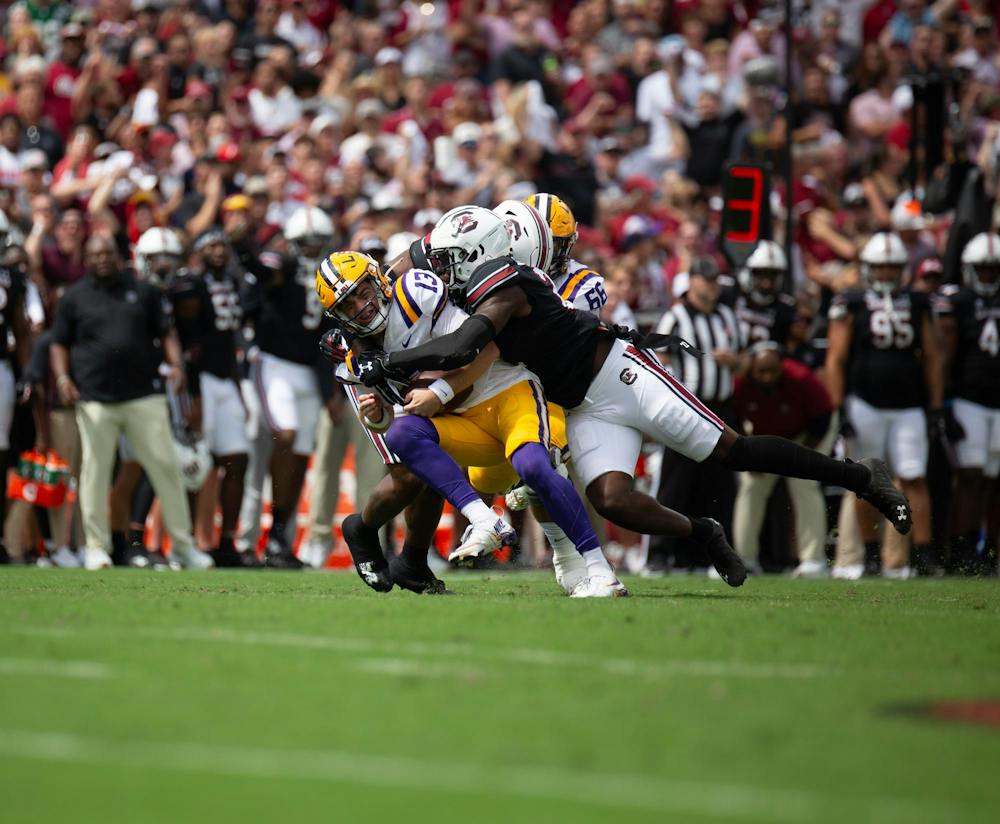
On many fall Saturdays, tens of thousands of fans rush into the gates of Williams-Brice Stadium to witness what they hope will be a demonstration of athletic mastery, an excellence in pushing the ball down the field. Fans get rabid. Referee calls are met with fierce protest.
Let’s say two players collide. From more than 100 feet away, the average middle-seated fan might watch one fall, shake it off, get back up and return to action. But for congenital football fans like Neil Brown, it’s more than a visual blip. He can virtually hear the clink their helmets make: the sound of an impact with unpredictable consequences.
Brown, a senior at the University of South Carolina, has been in the crowd since he was two weeks old. As such, he's witnessed countless helmet collisions, each occurrence met with varying degrees of crowd concern.
“I feel like we only really talk about it when someone is unconscious or has a really bad response,” Brown said. “I definitely think that most people are not really thinking about these humans. They’re just viewing them as athletes playing for their favorite team.”
Over decades of both professional and college football, the main concern for brain injuries has traditionally revolved around one word: concussion.
Concussions are a crucial consideration when looking at the force trauma a player endures post-collision. University of South Carolina professor Ahmed Alshareef, PH.D. is spearheading research examining how the human brain can physically deform immediately after high-severity impacts. In the Biomedical Engineering department, he focuses on the biomechanics of injury and the types of impacts that can cause traumatic brain injury (TBI).
Some of Alshareef's work examines how brain tissue responds to rotational head movements, often seen in contact sports like boxing. In a profile for the University of South Carolina, Alshareef analogizes the human brain during rotational movements to “gelatin being moved inside a bowl," since brain tissue is one of the softer materials of the body.
“If you move it in a rotational fashion – you’ve probably seen it in boxing where someone gets hit – with the rotational mechanisms of the brain, all of a sudden we see a lot of shearing in the brain tissue, a lot of deformation of those layers,” Alshareef said.
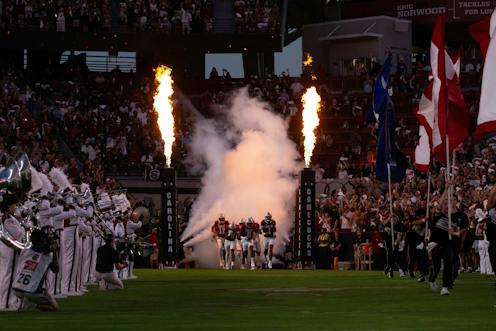
According to Alshareef, that movement is strikingly pertinent because it’s believed to be the main mechanism that causes concussion and any dysfunction related to TBI. The brain deforms relative to the head's rotational motion.
Alshareef’s biomechanical research primarily detects immediate responses to blunt force trauma and raises important research questions about traumatic concussions. But what do we know about long-term responses?
A growing body of research suggests that the long-term neurological effects associated with football may be more complex than the sheer number of concussions an athlete sustains.
Scientists examining chronic traumatic encephalopathy, also known as CTE, are increasingly looking at the effects of repetitive head impacts (RHIs) sustained over time. This includes hits that may not produce symptoms sufficient to warrant a concussion diagnosis. Recent research supported by the National Institutes of Health (NIH) suggests that repeated head impacts alone can cause early – and lasting – alterations in the brains of young athletes. These can occur years before physical symptoms even appear. The study’s findings suggest the potential for earlier CTE diagnoses and treatment than is currently possible.
CTE is a disease that can damage brain tissue and has the potential to kill brain cells. Today, the disease can only be definitively confirmed posthumously. Though on occasion contested between scientists, symptoms typically associated with CTE include personality changes, memory degradation, depression, confusion and even erratic, violent or suicidal thinking. Experts are now aiming to find out just how prevalent CTE is in both contact sports players and other injury-prone occupations. Because no 100% verified CTE tests exist for living subjects, consensus on the condition has been limited.
Honing in on a group of younger athletes shifted the focus to detecting earlier signatures of cell damage compared to the advanced form of the condition. In the study, researchers used single-nucleus RNA sequencing on brain tissue from three groups of 28 total participants: eight without known RHIs, nine exposed to RHIs and 11 with low-level CTE. The majority of the participants had played football.
They found striking results, including an average 56% reduction in a specific population of neurons among individuals who had sustained RHIs compared with age-matched controls. The neuron decrease occurred in the cortical sulci, the region assumed to absorb the greatest mechanical force after trauma. The cellular changes themselves are dramatic, especially in consideration of subjects with no visible CTE.
What does this mean for young athletes?
Repetitive head trauma can begin earlier than previously thought – and an impact does not have to induce a concussion, or even noticeable symptoms, to have lasting effects. With years of playing, RHIs can occur thousands of times. This distinction is relevant in college football, where athletes may play out their careers on top of years of competition throughout adolescence, often having sustained many head impacts, but potentially zero concussion diagnoses.
Bobak Abdolmohammadi has worked as a researcher at Boston University’s CTE Center since 2016. As an author on several brain injury studies, he emphasizes taking a closer look at what may or may not correlate with CTE. In their studies, the researchers have asked the families of brain donors to estimate how many concussions the player might have sustained throughout their career. Yet it isn’t the most accurate estimate.
“We’ve always, from the very beginning, never really seen a link between that informant-reported concussion count and risk for CTE,” Abdolmohammadi stated. “But we have very consistently seen a strong link between duration of play as a proxy measure of overall repetitive head impact exposure and risk for CTE.”
One of Abdolmohammadi’s recent works is a 2023 study conducted on 152 contact sport athletes exposed to RHIs younger than 30 years at the time of death. Researchers detected CTE in 41.4%. Of these 63 diagnosed athletes, 45 had competed only below the professional level, including youth, high school and college sports.
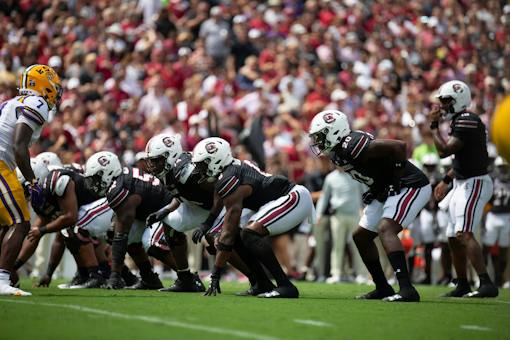
It is crucial to note that this does not mean that 41.4% of all young athletes (or college football players) have or will develop CTE. Rather than a representative sample of all athletes, the researchers sampled highly symptomatic brain donors. As 58.6% did not have CTE pathology, the symptoms of the group were likely multifactorial. Abdolmohammadi put it simply: by definition, young people don’t die as often.
The reason for death among the group is highly variable, and therefore a different profile requiring more research is necessary to definitively confirm a high prevalence. Nevertheless, the study demonstrated that mild CTE pathology has the potential to manifest in young players who hardly, or never, make it to the professional level. But what happens to those who do?
In August 2026, newly published CTE research went viral. It was a retrospective study of NFL players that examined 1,712 former players who died between 2008 and 2021. Of the sample, 338 had donated their brains for neuropathological examination, whose brains were examined to discover a range for the prevalence of the disease. Researchers discovered CTE in 315 of those 338 donors. It’s an arresting number – 93.2%. But researchers noted that ultimately, out of the entire group of 1,712 former players, CTE prevalence ranged between 18.5% and 98.7%.
When specifically examining the 2016-2021 period, they found that even at the most conservative estimate, a minimum of one-quarter of former NFL players had confirmed CTE pathology. This recent finding has fueled conversations about brain injuries in football.
Between the two studies, Abdolmohammadi acknowledges that they differ in scope, and that data from young contact sport players cannot necessarily be extrapolated to the NFL, and vice versa.
Daniel Daneshvar, M.D., PhD, the Chair of the Department of Physical Medicine and Rehabilitation at Harvard Medical School and Mass General Brigham, director of the HealthSpan Lab and a professor at Harvard Medical School, authored the study. In email correspondence with Garnet & Black, he shared insights into his research and the future of CTE diagnoses.
Currently, scientists are trying to determine how to detect the disease before death. Daneshvar acknowledges the current limitations of testing on living subjects.
“I am optimistic that we will eventually be able to diagnose CTE during life, but we are not there yet. Right now, we do not have a test that can diagnose CTE in a living person with known accuracy.”
In a similar vein, Daneshvar emphasized the nuanced setbacks.
“This does not mean people with CTE do not have symptoms while they are alive," Daneshvar said. "The challenge is that memory problems, behavioral changes and other symptoms can also be caused by Alzheimer’s disease and many other conditions. There is very promising work happening with clinical evaluations, imaging and fluid biomarkers, but that validation is critical.”
Brown believes in balancing advocacy for college player safety concerns and discomfort over current measures with continued support for the sport.
“I definitely think it’s possible to love college football while also heavily weighting and putting a lot of effort toward education on concussions.”
As this research continues, college athletics organizations are continuing to debate safety measures to reduce RHIs – whether it be physical safeguards like guardian caps or fundamental changes to reduce collisions altogether.
"The clearest opportunity is reducing contact in practice," said Daneshvar. "NFL players now average less than one contact practice per week during the regular season. If college, high school and youth football practiced more like the professionals, we could eliminate a substantial amount of head-impact exposure without fundamentally changing the game."
In the crevices of most CTE studies lies an important caveat: not all players will develop CTE, nor will they react to injury the same. While the results can seem haunting, the main takeaway is a necessity for further safeguards. Cumulative exposure to RHIs is not something that can be easily measured nor written off.
Both Abdolmohammadi and Daneshvar want to disrupt the assumption that football is the horseman of brain death.
“The main thing I would add is that this should not become a false choice between protecting the brain and preserving sports. I played football. I know what sports can give people, and I want athletes to continue having those experiences,” Daneshvar said.
Editor's Note: University of South Carolina football players featured in the photos provided by The Daily Gamecock are not associated with the contents of the article.


