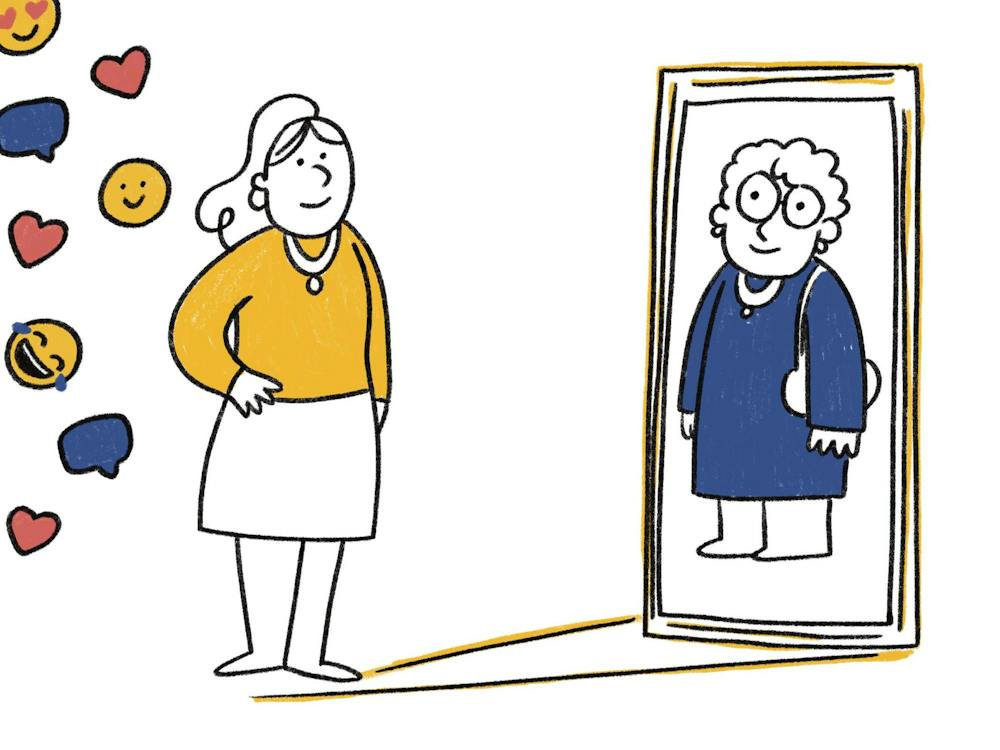
As a generation that grew up around social media, Gen Z may appear to be the least traditional generation yet. Dating apps have changed how people meet, TikTok has changed how people communicate and social media has made it easier than ever to share the most personal details of everyday life with strangers.
But some young people are beginning to question how open they truly need to be.
For some members of Gen Z, there seems to be a growing preference for privacy, commitment and more purposeful relationships. While they are not necessarily rejecting modern dating or social media altogether, they are increasingly questioning how much of their personal lives should be shared online and what dating should look like.
For Te’Asia Smith, a sophomore accounting and finance major, and Josalynn Shaw, a sophomore exercise science major, that shift is noticeable.
“I would say dating young — not dating just to date someone else, but dating to marry. I would definitely say that it's more traditional; I feel like it's coming back,” Smith said.
Shaw agreed, describing a similar desire for purpose in relationships.
“Yeah, definitely, just with a purpose. Don't just date just to date,” Shaw said.
Neither student described this shift as simply political. Instead, their comments pointed to something more personal: a desire for a relationship that feels meaningful rather than performative.
For Shaw, privacy is an important part of that.
“I feel like in your relationship, you should have whatever you're doing behind closed doors — there should be a certain extent that you tell people. If you do tell someone, make sure it's a close friend, something like that. But I feel like everyone should have some type of privacy.”
Despite this desire for privacy, both students are disinclined to keeping a relationship hidden.
“I will, to the death, believe in private, but not secret,” Smith said, explaining that publicly sharing a relationship can also invite unwanted opinions and interference from other people online.
Shaw expressed a similar concern. She said students may hesitate to post their relationships because they fear backlash or unwanted attention from other people.
“That's why, me personally, I also like, you know, private, but not a secret, because I know what we have going on,” Shaw said.
Social media has made the boundary between what’s meant to be private increasingly difficult to maintain. What might once have stayed between two people can now become content for hundreds or even thousands of others.
Smith sees that as a problem.
“I feel like social media definitely has kind of invaded privacy because you'll see people comment different things about their relationship. Some things are better left unsaid than being put on the internet or being blasted out to your friends,” Smith said.
Shaw believes the same problem extends beyond relationships. She said Gen Z still has “a really bad problem” with oversharing, particularly on platforms such as TikTok and Instagram. However, she has a simple rule for deciding what belongs online.
“I feel like if you have to ask yourself, should I post this? Then you probably shouldn't.”
She also emphasized asking a partner for permission before sharing something about a relationship online.
That concern with privacy may be less about returning to an older generation's values and more about adapting to life in an environment where almost everything can be recorded, shared and permanently stored.
Kelly Evans-Grieshaber, Ph.D., who teaches social media and sports media courses in the School of Journalism and Communications, said she sees both sides of Gen Z's relationship with social media. Some students continue to post their lives openly, while others are much more selective about what they share publicly. She does not believe it is accurate to paint Gen Z with one broad brushstroke.
“Gen Z isn't stupid. Y'all know that, if it's put out on the internet in any way, shape or form, even if you have the most private controls on there, it's not private, because as soon as one person sees it, they can screenshot it and share it,” Evans-Grieshaber said.
This awareness may help explain why some young people are pulling back from oversharing. At the same time, Evans-Grieshaber argues that social media has fundamentally changed expectations surrounding relationships and communication.
Dating apps, for example, have made meeting people faster and easier, but that convenience can also change how seriously people approach relationships.
“When people were on eHarmony and Match, that meant you were serious about dating and getting serious. Now that we have these apps on our phones, and we can get to them faster and quicker, and we can make decisions quicker, the seriousness has been taken out of that,” Evans-Grieshaber said.
For Smith, the result is a generation that may struggle with intimacy while simultaneously being surrounded by constant exposure to it online.
“I would definitely say I view intimacy as something that's very private,” Smith said.
Shaw similarly argued that the internet can shape intimacy in opposite directions. Some people may become more cautious because of what they see online, while others may constantly pursue what they see on social media.
“I feel like the internet can either present a good way or a bad way of intimacy. I feel like you should just have a middle-level ground, and if that's what you want to do, you need to communicate with your partner as well as being safe with your partner,” Shaw said.
The question, then, may not be whether Gen Z is becoming conservative. It may be whether growing up online has made some young people more cautious about the consequences of being constantly visible.
Evans-Grieshaber said social media's algorithms can reinforce people's existing beliefs by repeatedly showing them content that reflects their values.
“The social media algorithms pick up way more than you think,” she said. “It's also not real. The whole goal behind a social media algorithm is to get you to stay on their app longer.”
This creates a strange contradiction. Young people have more opportunities than ever to see different perspectives, but algorithms inevitably place them inside highly personalized echo chambers.
The same technology that encourages people to share can also make them more aware of what can happen when they do.
Smith and Shaw both emphasized that people do not need to broadcast their relationships to prove that they are real.
“It's okay to be private about your relationship. You don't have to blast it all on the internet,” Shaw said. “It's okay to just take that time for you and your partner.”
That sentiment may sound traditional, but it does not necessarily fit neatly into the conservative-versus-liberal divide. Wanting commitment, privacy or boundaries in a relationship does not automatically determine someone's political beliefs. For some young people, these values may simply reflect how they want to navigate a world where social media makes private life increasingly public.
Maybe Gen Z is not returning to the past at all. Instead, we may be developing new ideas about intimacy and privacy in response to a world where almost nothing stays private for long.
For Smith, the answer is ultimately personal.
“Just don't always listen to what everybody else is saying. Just do what you think is right or how you feel.”
In a culture increasingly shaped by algorithms, public opinion and constant visibility, deciding what to keep for yourself may be one of the most personal choices a person can make.


