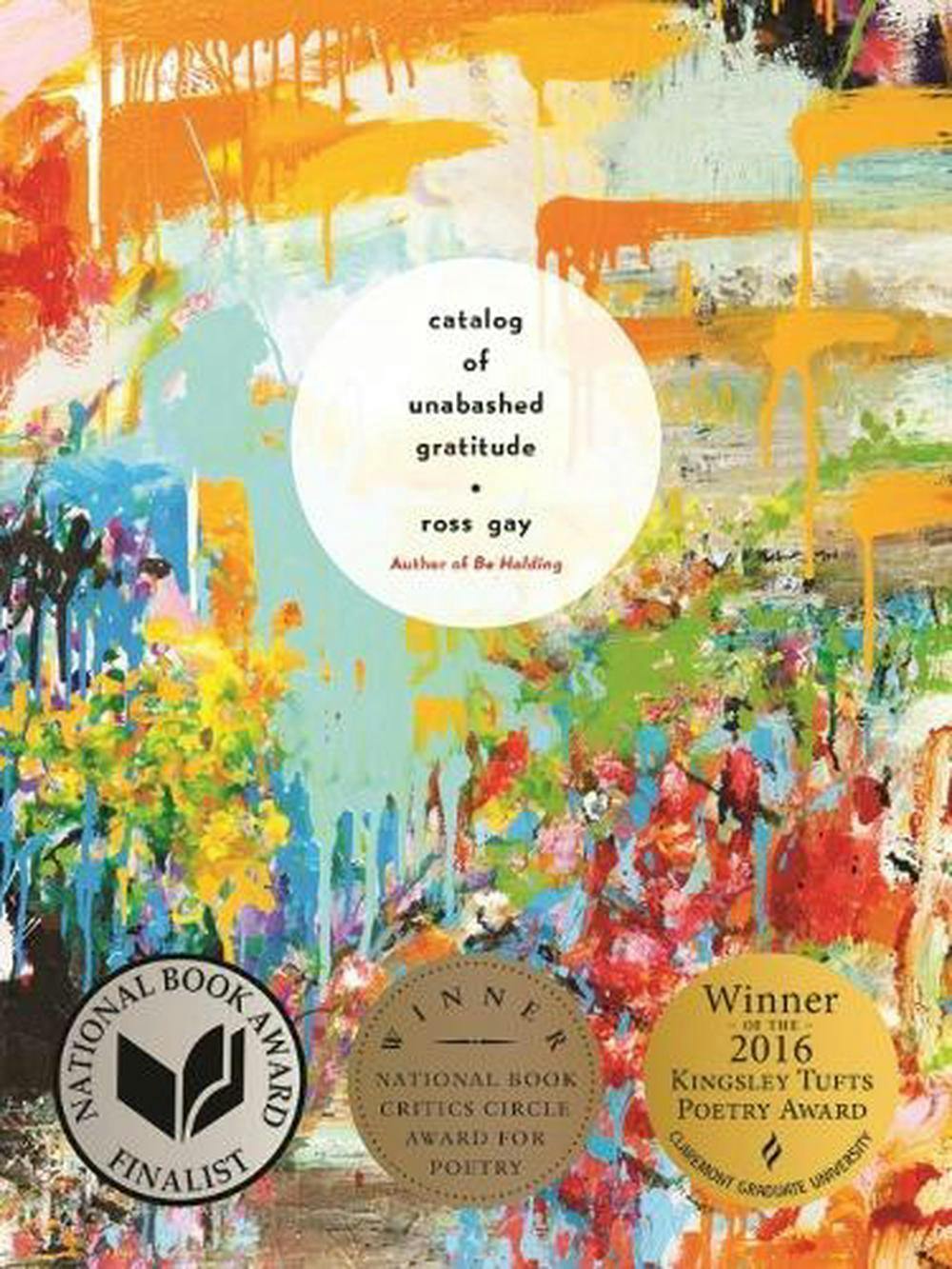
To start his talk on the first night of The Open Book, Ross Gay, nationally-renowned poet and essayist, commented on the relationship between books and their readers. Reading, he said, was a kind of friendship, one where readers get to know the perspectives of other characters and speakers. As he spoke, rows of attendees had copies of Catalog of Unabashed Gratitude, Gay's prize-winning poetry collection, in their hands. Many had already read the book. Some had bought copies from All Good Books' table minutes earlier. All were excited to hear from the man who'd written it, ready to engage in Gay's literary friendship.
Gay's reading was the first event of USC's yearly Open Book reading series. This series, hosted by the USC English Department, brings writers across all genres to speak about their work. All of these events are free and open to the public, meaning that USC students, staff and faculty can attend alongside members of the Columbia community. For Professor Elise Blackwell, the host of The Open Book, this diverse audience is one of the series' greatest strengths.
"There's people in the audience at Ross Gay's event like Nikky Finney who are every bit as well known as Ross Gay," she said. "And I love that, but we also have beginning writers in the room, people who are maybe just taking introduction to creative writing and seeing if they like like it or not."
Part of The Open Book's broad appeal stems from its focus on promoting contemporary literature. In addition to Gay, this year's edition features prize-winning writers like Leif Enger, Julia Phillips and Percival Everett. All of these writers are at the vanguard of literary fiction and poetry, something that can be a breath of fresh air to those who've only studied the canon.
"The chance to interact with highly respected authors who are at work today, I think, provides a different experience," she said. "And then we're not seeing it as sort of a museum, objective study but as a living, breathing art that's being made right now in collaboration with other people."
The work Gay presented that night, particularly his poems and essays about friendship, were especially pertinent to our contemporary cultural moment. Gay's work frequently speaks on the need for social connection even in times when society can feel inundated with division. One essay he read juxtaposed viewing statues of armed soldiers and MAGA merchandise stores with receiving a high five from a stranger at a cafe, showing how joy can be found even amongst extreme polarization. For Dr. Brian Glavey, who introduced Gay at the reading, this simultaneity reflects the work's hope in a complicated, yet joyful form of friendship.
" [Gay's] project isn't Pollyannaish or naive or about turning a blind eye to suffering or violence or division. But on the contrary, it's really insisting that it's in part because of the omnipresence of this kind of struggle that the need to really pay attention to these moments of joy is especially vital," he said.
Gay's friendly writing style blendedits way into his reading style as well. Throughout his talk, Gay frequently asked questions from the audience and shouted out one of his former mentors in attendance. After reading an essay that compared a young pickup basketball player to Dawn Staley, Gay jokingly left the podium to bow for applause. While reading "Catalog of Unabashed Gratitude," a nearly 15-minute poem, Gay made sure to look up or gesture to the audience every time he said the word "you." The attendees seemed to be part of the poem too, and Gay wanted them to know that.
"It's very clear that [Gay] is really serious about that desire to connect that he's talking about in the poems," said Glavey. "You really feel in the room that he's really eager to make a connection."
In addition to celebrating Gay's work, the reading served as a reunion for Columbia's literary community. Professors caught up with former students, book clubs sat together in rows of folding chairs, and friends from across the city caught up with one another's lives in the moments before the talk. All, Glavey notes, were united by a love of books.
"There was a moment last night when Gay was reading where he started reading and there were people in the crowd who had the book and opened it to the page he was reading from and were reading along," he said. "That was really kind of an exciting thing to see."
Likewise, Blackwell discussed how The Open Book displays Columbia's love of literature, even if the city is stereotyped as a non-literary town.
"I wanted Columbia to be a place where there was stuff to do, and of course, there already were many wonderful authors coming through town, and I wanted to continue that tradition and spread the word about it," she said.
The Open Book continued with Leif Enger on March 25th, Julia Phillips on April 1st and Percival Everett on April 23rd. Everett's reading is ticketed and currently sold out, but there is a waitlist for extra tickets should they become available.


