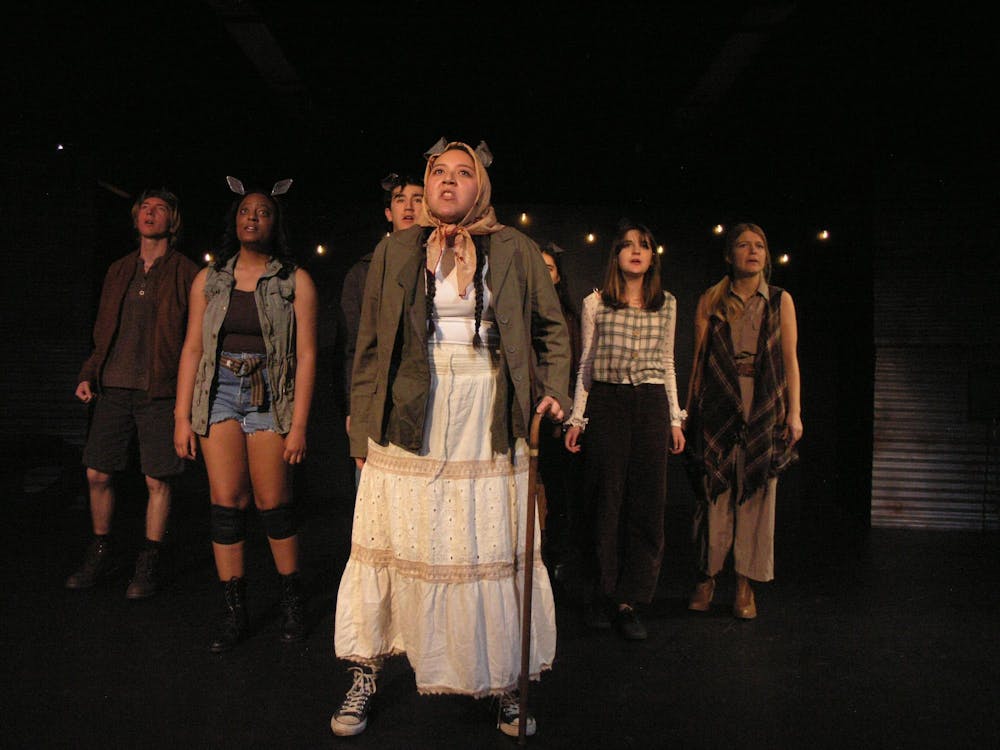
As the premier undergraduate organization responsible for theatrical works, Ghost Light’s recent adaptation of a classic novel signaled a unique shift in their work, one deeply rooted in politics and geography. George Orwell’s Animal Farm was the centerpiece of their three-day performance in early December 2025.
Orwell's novel is about a group of farm animals that overthrow the farmer and establish a new system of governance supposedly driven by equality for all. Unfortunately for the animals, the pigs and their leader (Napoleon) form an oppressive government instead. The initial idea of equality and the corrupting nature of power are focal points of the novel, which Ghost Light meticulously explored through its play.
Members of the organization shared their insight into the show and their roles as characters or stage managers. When asked about the inspiration for the play, they turned to the modern political climate.
Lucia Ramos Calleros, who played the characters Major and Boxer in the adaptation, explained the political connection.
“What makes this production of Animal Farm significantly different from others that I’ve seen is the relevancy, and especially with the rise of censorship, particularly in South Carolina; we are the top state for book censorship."
Since May 2025, South Carolina has become the leading state for state-mandated book bans in the public school system. Animal Farm is frequently joins banned book lists because of its obvious political allegory, among other contested moral issues. Earlier legislation passed on June 25, 2024, turned the public school curriculum (including books in classrooms and state-funded libraries) over to the mercy of the South Carolina Department of Education. Since May 6, 2025, there are a total of 22 books that are restricted from all grade levels. By organizing an entire play around a controversial novel, the organization aims to highlight how dangerous political fascism and miseducation in the current environment are.
By playing two contrasting characters: Major, who supports the tyrannical system of governance, and Boxer, who resembles the inherent exploitation of the working class, Calleros portrays the intangible nature of the novel. Through embodying two sides of the system, her performance highlights how power and labor were crucial for the farm's governing system. This strategic decision to have one person play contrasting, yet important characters serves as a direct critique of political complicity.
Aside from political geography and character decisions, South Carolina’s widely recognized agricultural and farm-based society was essential to the play. Olivia Davis, the Scenic Designer, drew on this relation when designing various parts of the play.
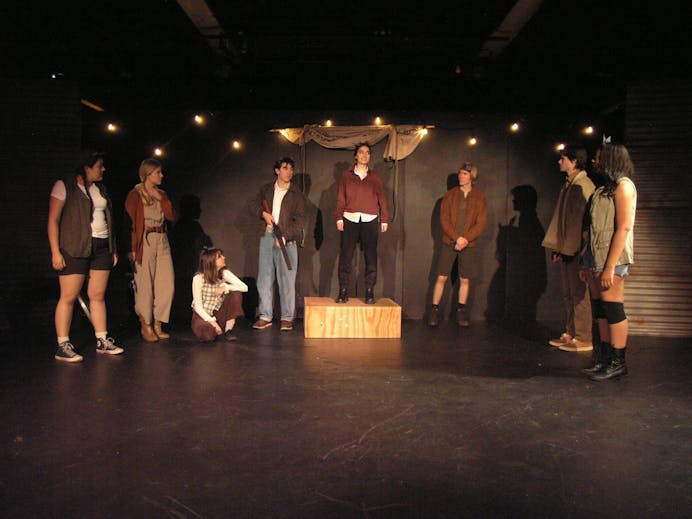
“Being in South Carolina, a lot of the director’s vision came from the Appalachian, rural idea; there was a lot of rust and natural wood texture that ended up being really central to the play. I think that gave it a really grounded nature."
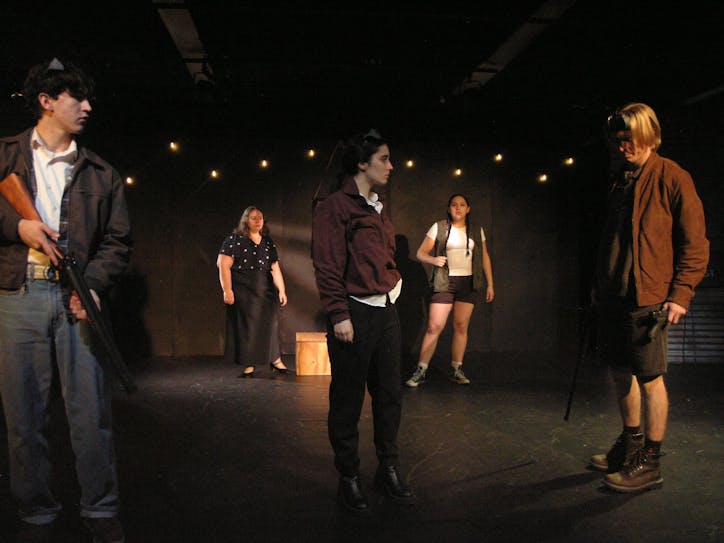
Cast member Aubrey Ford also mentioned the dangers of being a bystander and not doing anything to help. To highlight this message, the director of the play changed Orwell’s original ending, which depicts the pigs as humans themselves because of their corruption. In Ghost Light's ending, the storyteller shoots the character Clover, a horse who represents the working-class women.
"What Josh wanted the audience to be more so mad at the storyteller and say, "why didn't you do anything?""
This seemingly minor, but drastic alteration from the original novel serves as a perfect example of the effort that went into this performance. Lucia Calleros further expands on this idea of complacency and its inherent privilege.
"Liz, our actor for the storyteller is so renowned in taking the dangers of complacency, especially what we're seeing in our political context now, and really attaching what it means to be a bystander and the privilege it is not to be affected by politics and not be affected by the grandeur of things that are happening outside of your circle."
Zach Krebs, another cast member, also touched upon another message about the ease of misinformation.
"I think another important message that we all kinda wanted to take away was how easily certain messages can be misconstrued."
In the novel, Major recommends a governing model with good intentions in mind, which is eventually taken and twisted into an oppressive form of governance by Napoleon.
Olivia Davis and Sara Brown, the Stage Manager, were particularly fond of the play’s tiny details and messages they carry.
The commandments that the animals created were constantly changing in the novel because of the animals’ actions. To bring this to life, they treated the commandments as their own characters and attached magnets to the prop to allow the actors to change the commandments on stage during the play. This movable difference was essential to showcasing the constantly evolving nature of society and politics.
"Part of the meaning of the show is not what's written down but what's enforced and what matters because they can have all the right commandments on the wall, but if they're not enforcing those rules and if we're not keeping the same standards for everyone, then we are leading into that fascism."
The cast members all expressed their gratitude to the director, Joshua Cook, for full creative freedom to implement certain things happening in the current political environment.
The organization’s adaptation of "Animal Farm" signaled a shift in their theatrical work, one that mirrors the political changes happening at all levels of our current government. Ghost Light’s key messages were showcased through tiny details and major edits to Orwell’s original novel, which the actors brought to life wonderfully.
As Orwell says, “All animals are equal, but some animals are more equal than others.”


