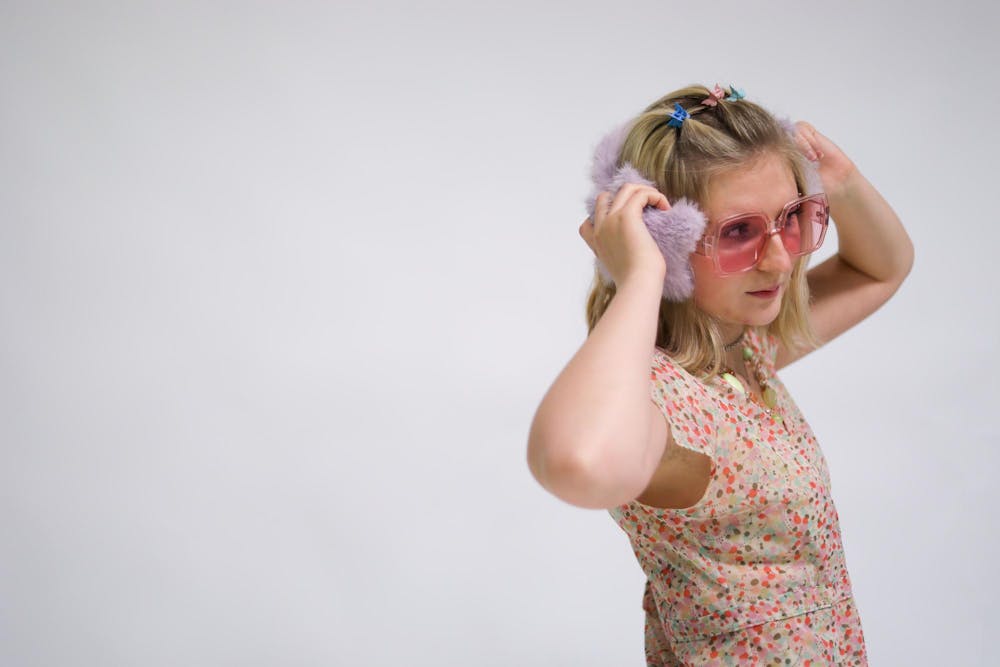
This year, Pantone made its announcement that the color of the year is… white. Or, more specifically, Cloud Dancer, a shade so subtle it may or may not already be on your walls, sneakers and laptop charger. For the first time in its history, Pantone has crowned a near-absence of color as its defining hue, raising an interesting question: what does it mean when fashion’s biggest statement is neutrality? As runways, wardrobes and trends shift toward softer, quieter palettes, the shift away from bold color may signal more than a passing aesthetic. It might reflect a change in how fashion and the people who wear it want to be seen.
Although Cloud Dancer was presented as a calming color of quiet reflection, many stylists and designers in the fashion world reacted to it with skepticism rather than relief. For some, the decision felt disconnected from forming trends and the emotional reality of the current cultural moment.
Coco Farrell, a fashion merchandising major and member of the USC Fashion Board, who has aspirations of styling in film and television, said her first reaction to the announcement was surprise. With trend predictions leading towards a bright, vibrant color, the pivot to white felt sudden and restrictive.
“It was marketed as a relaxing type of color, or like a break for your brain, but it kind of feels like a padded room," Farrell said. "Very restrained.”
To Farrell, the color reflects a broader emotional fatigue. While neutrality can be framed as peaceful, she questions whether muting expression is the right response to a moment defined by political tension, constant news cycles and cultural uncertainty.
That sense of restraint raises larger questions about creativity in fashion. If color is removed from the equation, designers are forced to find meaning elsewhere or push back against it entirely.
“At first, I saw it as a limit to creativity,” Farrell said. “But I kind of want to use it as a blank canvas… There’s so much that you can do with it.”
While Farrell acknowledged the potential for innovation through the texture and structure of clothing, she also admitted the trend has caused her to intentionally explore color in her own styling choices as a way to resist conformity.
“I definitely push against conformity,” Farrell said. “So now I’m kind of pushed toward exploring a colorful side, just to go against the grain, and to go against what I was given.”
Local fashion designer Diko Pekdemir-Lewis, founder of the Columbia-based brand Anton & Maxine, offered a more critical perspective. From her design background, she emphasized that white is often not considered a color at all, making its selection as the color of the year especially troubling.
“From a design point of view, white is not a color,” Pekdemir-Lewis said. “So for Pantone to choose white as the color of the year, I would expect something more vibrant, more alive.”
Beyond aesthetics, Pekdemir-Lewis expressed concern about the cultural implications of the choice. In the current political climate, she argued, white carries unavoidable associations with white nationalism and supremacy that make its rise feel poorly timed.
“Even if you don’t want it, you automatically associate it politically,” she said. “Why? Why that color? What are they trying to tell us?”
Pantone framed Cloud Dancer as a color meant to soothe and calm, but for Pekdemir-Lewis, that message feels out of touch with reality.
“We don’t live in a calm time,” she said. “And we don’t want to be calm because what’s going on is not OK… Don’t calm us down. We don’t need that.”
Despite the fashion industry’s attention to the color of the year, many designers do not believe the trend will significantly alter how they approach their work. Pekdemir-Lewis, whose brand is known for its commitment to black garments, said trends do not dictate creative identity.
“What you create is not for everyone,” she said. “People who love all black, they will find you… I will not change it just because some people decide that the color of the year will be white.”
Farrell sees the trend less as a rule to follow and more as something to push against. Rather than muting expression, she believes neutrality may encourage intentional color choices, even in small ways. To Farrell, color becomes a form of visual communication, a way to express emotion in a cultural moment of exhaustion and overstimulation.
“There’s always something in the news, always something that you can be stressed about,” she said. “But I kind of hope that people will choose to pursue color and break themselves out of that habit of conformity or suppressed emotion.”
Pekdemir-Lewis echoed that sense of agency, emphasizing that trends really only hold power if people allow them to. She pointed out that recent color-of-the-year choices have leaned increasingly pale, a pattern she hopes will provoke a shift toward something bolder.
“If not everybody follows, they will shift,” Pekdemir-Lewis said. “It’s all on us — consumers and designers — what we do.”
When asked by Garnet & Black what color should define the year instead, both creatives independently gravitated toward green, a shade they associated with hope, growth and forward movement.
“Green kind of represents abundance and happiness,” Farrell said. “It’s a really good color for positivity and attracting positive things into your life.”
Pekdemir-Lewis, despite loving all things black, shared a similar sentiment, pointing to green’s connection to nature and its symbolic meaning across cultures.
“Green is a positive color,” she said. “It’s the color of hope in many different cultures.”
While Cloud Dancer may dominate trends and marketing campaigns, fashion’s future is unlikely to be defined by a single shade, especially one so close to neutrality. Instead, those influencing fashion often see color as a choice, a statement and, in some cases, a quiet form of rebellion.
Model: Dakota Diaz
Outfit 1
Top: Polka dot wrap shirt from Strange Times Vintage $18
Bottom: Lavender sequin skirt from Forever21 $20
Shoes: Pink kitten heels from NicePairs $105
Accessories: Pink sunglasses from Strange Times Vintage $12.99, blue glitter tights from Urban Outfitters $20
Outfit 2:
Top: White ruffle knit top from Urban Outfitters $20
Bottom: White barrel jeans from Vestique $62
Shoes: White Mary Janes from DSW $60
Accessories: Silver frame glasses from FrameFiesta $14, silver chain belt from Amazon $20


